
The digital success formula was known and consistent over the last ten years: research high-volume keywords, create backlinks, and compete to find a spot in the “ten blue links” on the first page of Google. But as we move through 2026, that equation has been changed with a tectonic shift in user information search. The conventional search engine results page (SERP) is no longer just a basic directory anymore; it is an advanced ecosystem fueled by artificial intelligence.
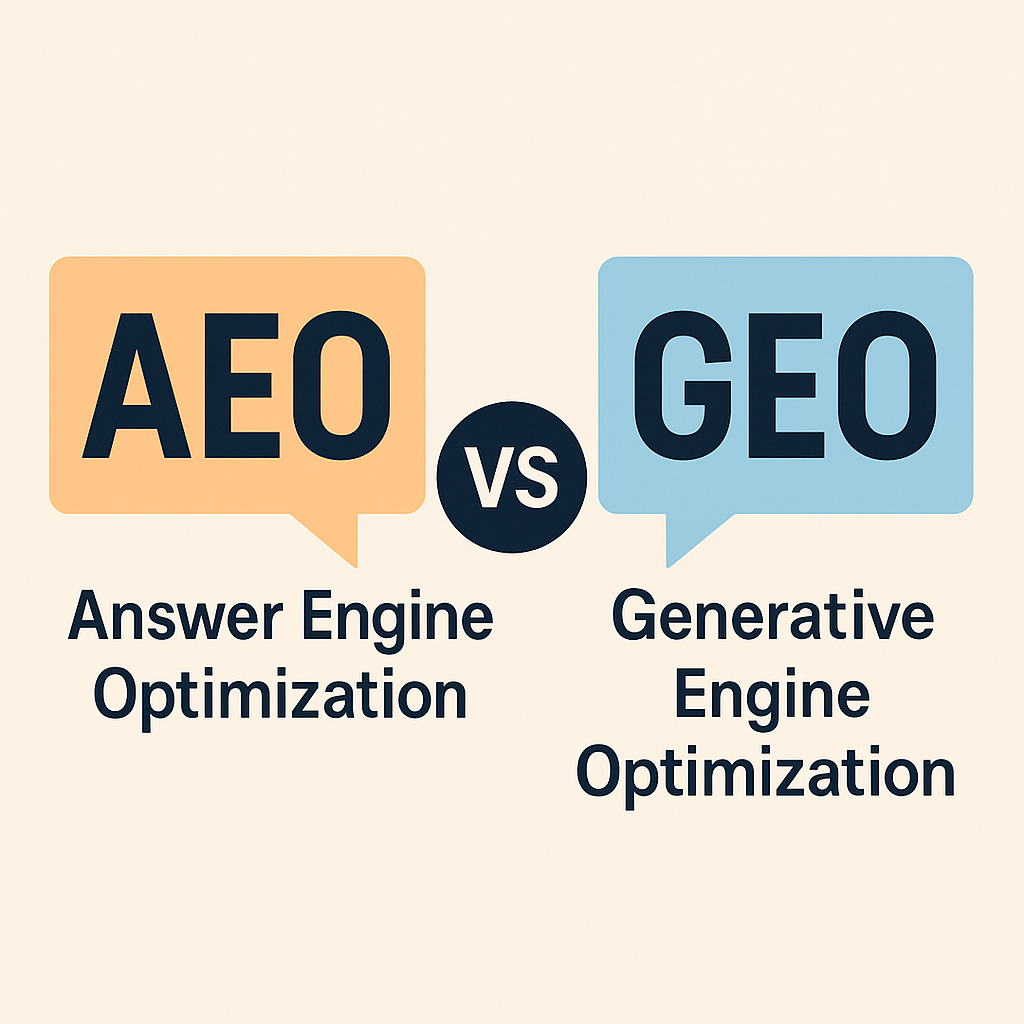
Two approaches have become the foundations of the contemporary appearance in this new landscape, which are Answer Engine Optimization (AEO) and Generative Engine Optimization (GEO). Although they both have a similar aim, that of putting your brand before the users, their processes and objectives differ. To stay relevant, business organizations have to learn the intricacies of AEO vs GEO and how to combine them into a detailed digital strategy.
What is AEO (Answer Engine Optimization)?
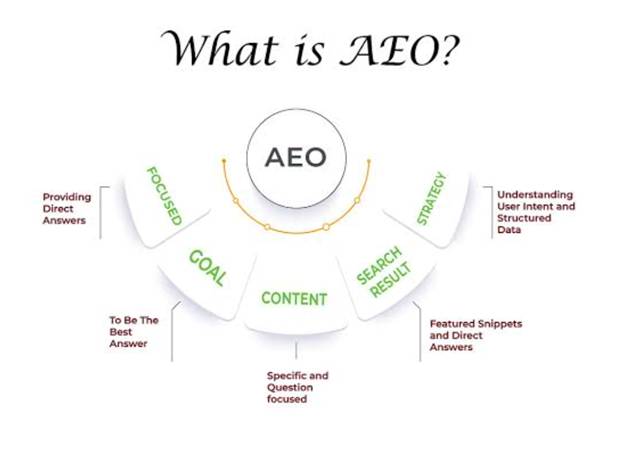
AEO is a content optimization strategy to provide the ultimate, instant response to the user’s query. Just consider that it is the “fast food” of search—users want a quick, accurate bite of information without having to click through a website.
Key Targets for AEO:
- Snippets Attached: That “Position Zero” box at the top of Google.
- People Also Ask: The drop-down queries that reflect in SERP.
- Voice Search: Alexa, Siri, or Google Assistant’s replies
In AEO, brevity is lord. When anyone inquires “How many calories are there in an avocado?” he or she does not require a long paper on the details of horticulture; he or she requires a number.
What is GEO?
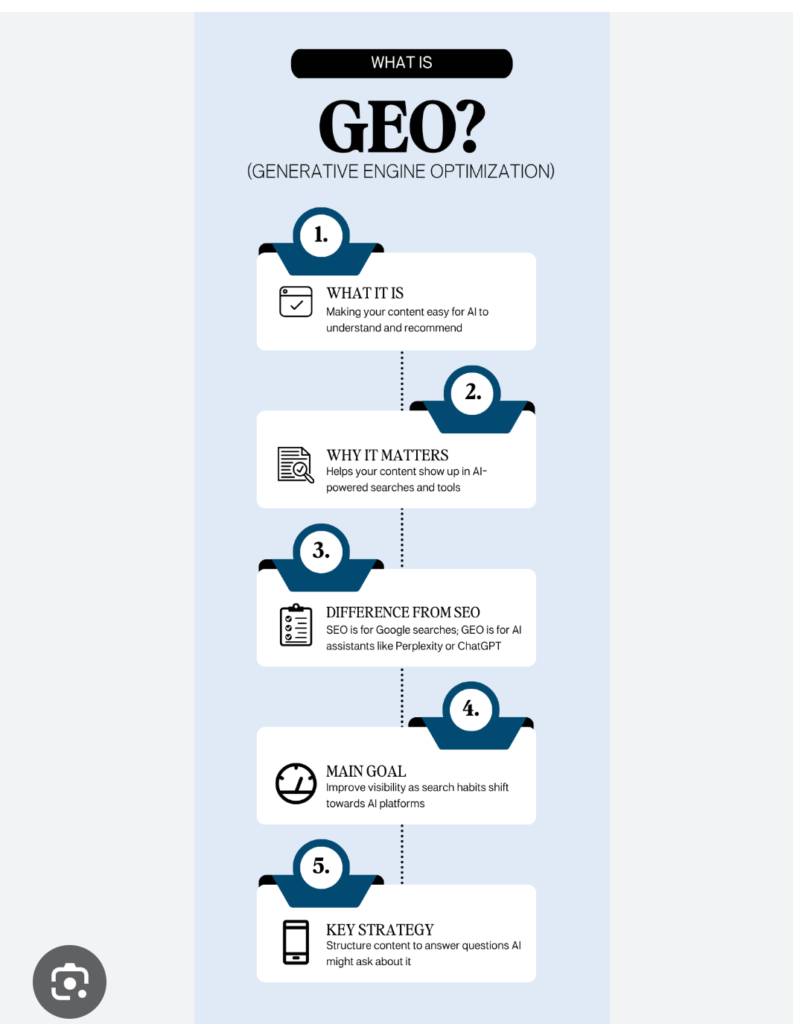
The latest development in the SEO world is GEO. It focuses on how to make your content “cite-worthy” for Large Language Models (LLM) such as ChatGPT, Google Gemini, and Perplexity AI. As opposed to AEO, which offers a single answer, GEO seeks to have your brand featured in a synthesized, conversational answer brought by AI.
Key Targets for GEO:
- AI Overviews (SGE): AI-generated summaries at Google.
- LLM Citations: As the source connecting link that ChatGPT or Claude offers to support its arguments.
- Conversational Discovery: It comes in the form of multiple-turn conversations in which users ask follow-up questions.
AEO vs GEO: The Core Differences
Although both strategies strive to meet the intent of the user in the era of AI, their execution differs significantly:
| Feature | AEO (Answer Engine Optimization) | GEO (Generative Engine Optimization) |
| Primary Goal | Direct, concise answers. | Synthesis and referencing in artificial intelligence summaries. |
| Content Format | Short lists, short tables, and question and answer blocks. | Articles are rich in narratives and have expert data. |
| Technical Focus | FAQ and How-To Schema markup. | Semantic HTML and entity recognition. |
| User Intent | Fact-finding and quick solutions. | In-depth research and comparison. |
| Success Metric | Impressions of featured snippets. | Citation frequency and LLM mentions. |
How to Optimize for Both in 2026
You do not pick one to remain ahead of your competitors, but pile them. The dual-strategy approach can be constructed in the following way:
- Master the “Answer-First” Format (AEO)
Organize your blog posts in such a way that the main question is the H2, and this is immediately followed by the short, direct answer of 40-60 words. This “chunking” ensures that it is all too easy to have Google crawlers grab your text to provide a snippet or have Alexa read it to you - Prioritize E-E-A-T and Original Data (GEO)
The unique insights and verifiable facts are appreciated in the AI models. To win at GEO, add original research, case studies, or quotes from experts. By giving information that is not available in other sources, the generative engines will refer more to your site as the key source of truth. - Implement Advanced Schema Markup
The data that language machines communicate is called schema. The FAQPage schema should be used by your AEO targets, and the Organization or Author schema by GEO. This assists AI in knowing who you are and the reasons why your information is reliable. - Think “Conversational,” Not “Keywords”
The original SEO was constructed on the basis of particular keyword strings. AEO vs GEO are constructed on the basis of topics and intents. Be instructive, definitive, and natural, which mirrors how a person would clarify a concept to a friend.
Conclusion
The search environment is getting fragmented. Some users still prefer the list of links to be traditional, some users prefer faster voice answers, and an ever-increasing number of users prefer a simpler synthesized AI overview. By optimizing on the traditional SEO only, you miss the Zero-Click audience. By only targeting AEO, you miss the users who do deep research through ChatGPT.
The future of digital visibility is about being found (SEO), being the answer (AEO), and being the source (GEO). With a combination of all these three pillars, you will be sure that no matter how a user searches, your brand is the first one they see.
Ready to future-proof your online presence and rule the era of AI search? Collaborate with Webspot Technologies to transform your content strategy and stay ahead of the curve.